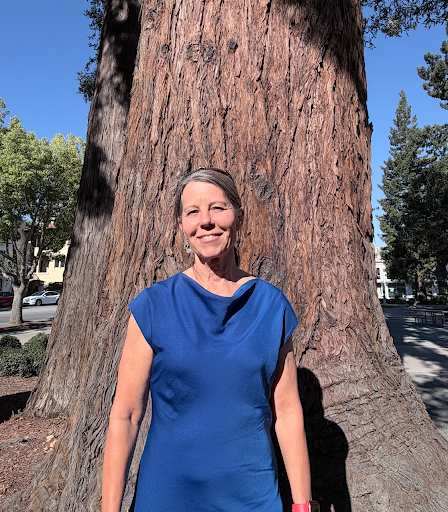
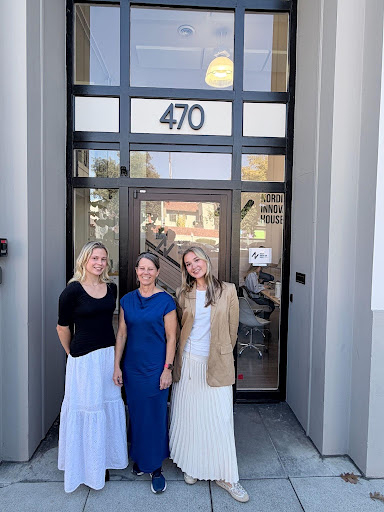
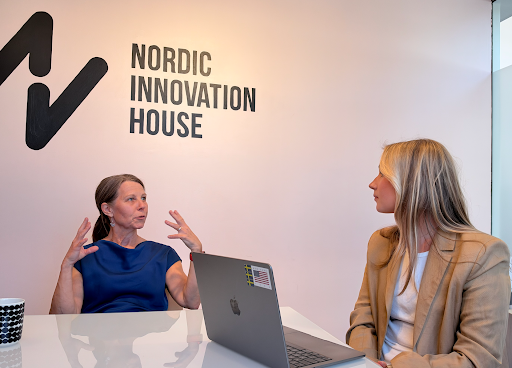
This month’s Meet a Member introduces Åsa Wheelock, co-founder of Hikari Bio, a Stockholm-based biotech company developing technology to discover protein biomarkers that could help enable earlier disease detection. In our interview, Åsa shares the story behind Hikari Bio, its connections to Sweden, Japan and California, and what’s next for the company.
Could you tell us a little about your background and how Hikari Bio came about?
My first visit to California was through an exchange program between Lund University, where I did my undergraduate studies in biochemistry, and the UC system. I was offered the opportunity to spend a year at a University of California campus. I was interested in toxicology, and UC Davis has an excellent program in the field, so I was fortunate to spend a year there. After the exchange, I returned to join UC Davis’s PhD program in pharmacology and toxicology, where I completed my doctorate between 2000 and 2004. That was also where I first became interested in proteomics, which was a very new field at the time. After my PhD, I moved to Japan for a postdoctoral position in bioinformatics at the KEGG laboratories at Kyoto University, as analyzing large datasets is another important part of the omics research field. I then returned to Sweden and joined the Karolinska Institute, where I established my own research group. Since then, we have been building what we call a systems medicine platform, focusing on the lungs. Systems medicine takes a holistic approach to understanding how different components of an organ or biological system interact, and the same principles can be applied to many organs and diseases. Hikari Bio is a spin-off from my research group at the Karolinska Institute. My research involves screening multiple levels of molecules to identify subgroups of patients with different diseases, primarily respiratory diseases. Through this work, it became evident that proteomics, the study of proteins, remains a relatively weak link in the tool box today’s molecular analysis technologies. Technologically speaking, proteomics has not advanced to the same extent as DNA or RNA sequencing, despite the importance of proteins. Proteins drive all processes within our cells, representing what is happening right now, making them excellent candidates as disease biomarkers.
This tech gap led us to develop a new proteomics discovery platform for identifying protein biomarkers that can help us better understand and diagnose diseases. The name Hikari comes from Japanese and means “light” or “beam of light.” Our technology is based on pulsed lasers, so the name felt particularly fitting.
In simple terms, what does Hikari Bio do?
We have developed a disease agnostic discovery platform for identifying protein biomarkers for early disease detection. When it comes to diseases such as cancer, early diagnosis is one of the most important factors for improving patient outcomes. However, many diagnoses still rely heavily on symptoms, which may only appear once a disease has progressed. For many patients it is too late once the symptoms start showing. By identifying molecular biomarkers in samples such as blood or lung tissue, we aim to detect signs of disease earlier. Ideally, we could even identify prognostic markers that indicate the risk of developing a disease before symptoms appear. Our platform focuses on discovering these protein biomarkers, which researchers can then use to develop diagnostic or prognostic tools.
How is Hikari Bio connected to Sweden, California, and Japan?
I am Swedish, and my husband, who is also my co-founder, is from California. I completed my PhD in California and later returned for a sabbatical with Randy Schekman at UC Berkeley just before the pandemic, so we have strong ties to the region. Until now, we have been able to get by on non-dilutive funding, but we are now looking for investors and industry partners. California and Sweden are natural places for us to build those relationships. However, Japan is another important connection, as we lived there for a couple of years. Our interest in Japan is both personal and professional. Our patent portfolio extends to Japan as well, and we love the country. Japanese engineering is also particularly strong in areas relevant to our technology. There are several companies that could be excellent partners, especially in laser technology. Interestingly, the idea behind Hikari Bio’s technology originated in California. During my graduate studies, I often discussed time-resolved measurements and potential technological approaches with Bruce Hammock, a wonderful mentor and amazing researcher in my graduate group who sadly passed away in January. Years later, when I established my own research group at the Karolinska Institute, I wanted to purchase an instrument based on this technology that I assumed would already exist. It seemed like a logical next step to me, but it turned out the technology was not available. That was when we decided to design and build it ourselves. So, in a way, the idea that eventually became Hikari Bio began here in California, before being developed further in Sweden.
What stage is the company at today, and what are your plans for the future?
We are at a very exciting stage. We have secured our patents and built prototypes that demonstrate the robustness of our platform. We can achieve single-molecule detection, which is an impressive level of sensitivity. We have now built our first minimum viable product, or MVP: a functioning instrument in our lab. We are also getting traction from key opinion leaders in the field. Our next step is to design a scaled version of the instrument that can be manufactured and sold in multiple units. In parallel, we are developing an AI-powered image analysis software-as-a-service solution to analyze the data our platform generates. Until now, we have operated at an academic pace, which can be relatively slow. We are now looking to accelerate our progress and bring the technology to the market. We are primarily a B2B company. Our customers are researchers who use our platform to discover molecules of interest. They can then use those findings to develop diagnostic or prognostic tools, which may subsequently go through the regulatory process required for medical technology or diagnostic products.
What has being a SACC SF/SV member meant for you?
Connecting with SACC SF/SV has been amazing for us because of the strength of the network and eco system. We are particularly interested in the Bay Area, although I know SACC has offices throughout the United States. Finding the right investors to approach can be a jungle. SACC SF/SV has helped us identify and curate an investor list, make connections, and facilitate meetings while I am in the Bay Area. The network has also helped us understand the legal options and practical steps involved in establishing a US corporation. These are areas where we would otherwise need to rely on expensive external partners, so having access to this support has been incredibly valuable.
Do you have a favorite place in Japan or the Bay Area?
I can start with Japan. I love the country, and we lived in Kyoto for a couple of years. There are so many beautiful gardens there, but one of my favorites is Ryoan-ji, known for its traditional dry landscape rock garden. It is a wonderful place to sit and reflect.